
The NWI Works Integrated System Will Close The Gap of Adult Job Readiness Faster
Hands-on learning was not removed from schools by one law or decision. It declined, narrowed, or was devalued over several decades because of four forces:
“College for all” became the dominant success model.
By the 1980s–2000s, many schools shifted resources toward college-prep academics, testing, and graduation/accountability metrics. Traditional vocational programs were often seen as lower-status or “non-college” tracks.Old vocational education had a real equity problem.
Many students—especially low-income students and students of color—were historically “tracked” into vocational classes that could limit access to college or higher-wage careers. That stigma made schools and parents wary of shop/vocational pathways. MDRC notes that this history still shapes skepticism today, even though high-quality modern CTE improves graduation and earnings outcomes.Industrial arts/shop classes became expensive to maintain.
Welding labs, auto shops, wood shops, machine tools, insurance, safety compliance, and trained instructors cost more than traditional classrooms. When budgets tightened, these programs were easier to cut or centralize.CTE came back—but in a different form.
Modern CTE is no longer just “shop.” It now includes advanced manufacturing, healthcare, IT, logistics, construction, hospitality, entrepreneurship, and college-credit/industry-recognized credentials. Federal CTE policy evolved from the Smith-Hughes Act of 1917 through Perkins V, signed in 2018, which supports today’s career and technical education systems.
Indiana is now clearly moving back toward career-connected learning. The state’s new diploma framework includes readiness seals, credentials of value, CTE pathways, and work-based learning; the Employment Honors Plus Seal includes 150 hours of work-based learning. Indiana also fully implemented Next Level Programs of Study in 2024–2025 to redesign secondary CTE. STEM learning in earlier grades is part of the same correction: earlier exposure to problem-solving, design, teamwork, and applied learning.
Impact on today’s adults in Northwest Indiana
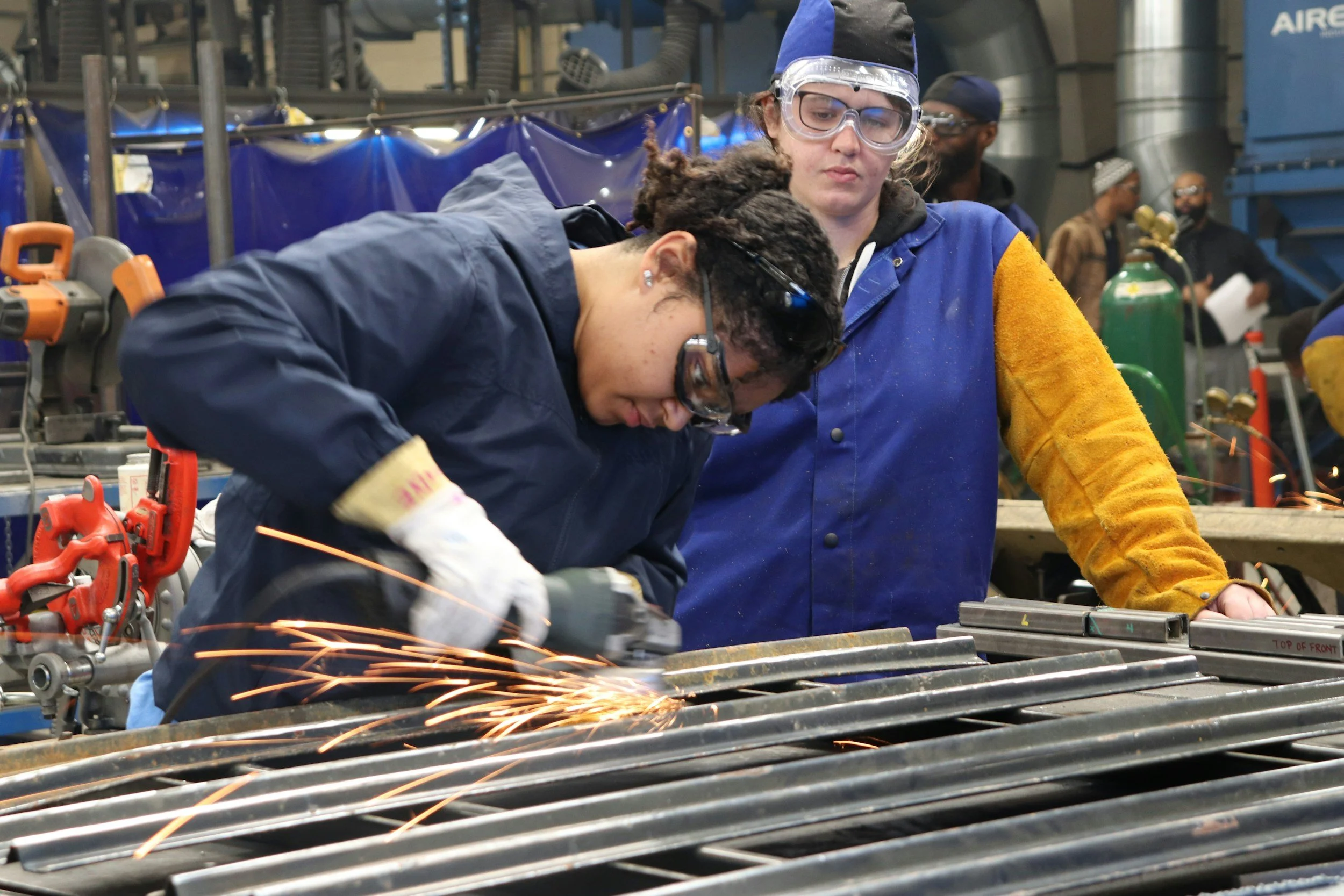
The result is a “missing middle” in the adult workforce. Many adults finished school without sufficient exposure to hands-on problem-solving, tools and equipment, workplace expectations, technical vocabulary, safety culture, teamwork, punctuality, communication, and career pathway awareness.
That matters directly in Northwest Indiana because the region’s primary pathways—manufacturing, healthcare, CDL/logistics, trades, technology, hospitality, construction, and infrastructure—are not learned well through classroom instruction alone. NWI Works’ Elston Opportunity Hub plan identifies these sectors as high demand and proposes an Engage–Prepare–Connect model with sector training, apprenticeships, simulations, wraparound supports, and direct employer connections.
The Fast Track to Top Jobs model directly addresses this gap by starting with workforce readiness—work ethic, communication, teamwork, professionalism, time management, safety—and then moving into sector employability tracks such as manufacturing/logistics, IT, professional services, hospitality, construction/trades, and green infrastructure.
Can opportunity collaboratives with CTE and intentional work experiences close the gap faster?
Yes—if scaled as adult career-readiness infrastructure, not just as school programming. CTE and work-based learning can shorten the path to readiness because adults learn employability fastest when they practice real workplace behaviors in real or simulated work settings.
For Northwest Indiana, the scale model should be:
1. Use Opportunity Hubs as adult CTE access points.
Place hands-on labs, bootcamps, employer demonstrations, career advising, and wraparound community support services in walkable hubs like Michigan City and Gary.
2. Make Fast Track to Top Jobs Bootcamp the common front door.
Every adult who lacks recent work exposure should complete a short readiness bootcamp before entering sector training.
3. Pair every pathway with work experience.
Job shadows, micro-internships, paid work experiences, employer projects, simulated work labs, and hiring events should be built into every track.
4. Organize by sector councils.
Employers should co-design the curriculum, validate credentials, provide equipment/worksites, interview graduates, and commit to hiring targets.
5. Build stackable short credentials.
Adults need fast wins: OSHA-10, ServSafe, forklift/material handling, CNA/PCT entry points, CDL readiness, basic digital/IT support, construction safety, hospitality/customer service, and manufacturing quality/safety basics.
6. Track outcomes publicly.
Measure completion, credential attainment, placement, wage gain, retention at 3–6 months, employer satisfaction, and cost per job outcome.
In summary, CTE and employer-driven experiences were not simply “taken out” of our educational continuum for youth and adults; it was stigmatized, underfunded, centralized, and overshadowed by college-only thinking.
Now it is returning as career-connected learning—but today’s adults need a bridge. NWI Works can become that bridge by scaling hands-on bootcamps, CTE, work experiences, and employer-connected pathways through systems integration happening inside and around opportunity hubs.