
Why America’s Talent Strategy Confirms The Vision Behind The NWI Works Opportunity Hub
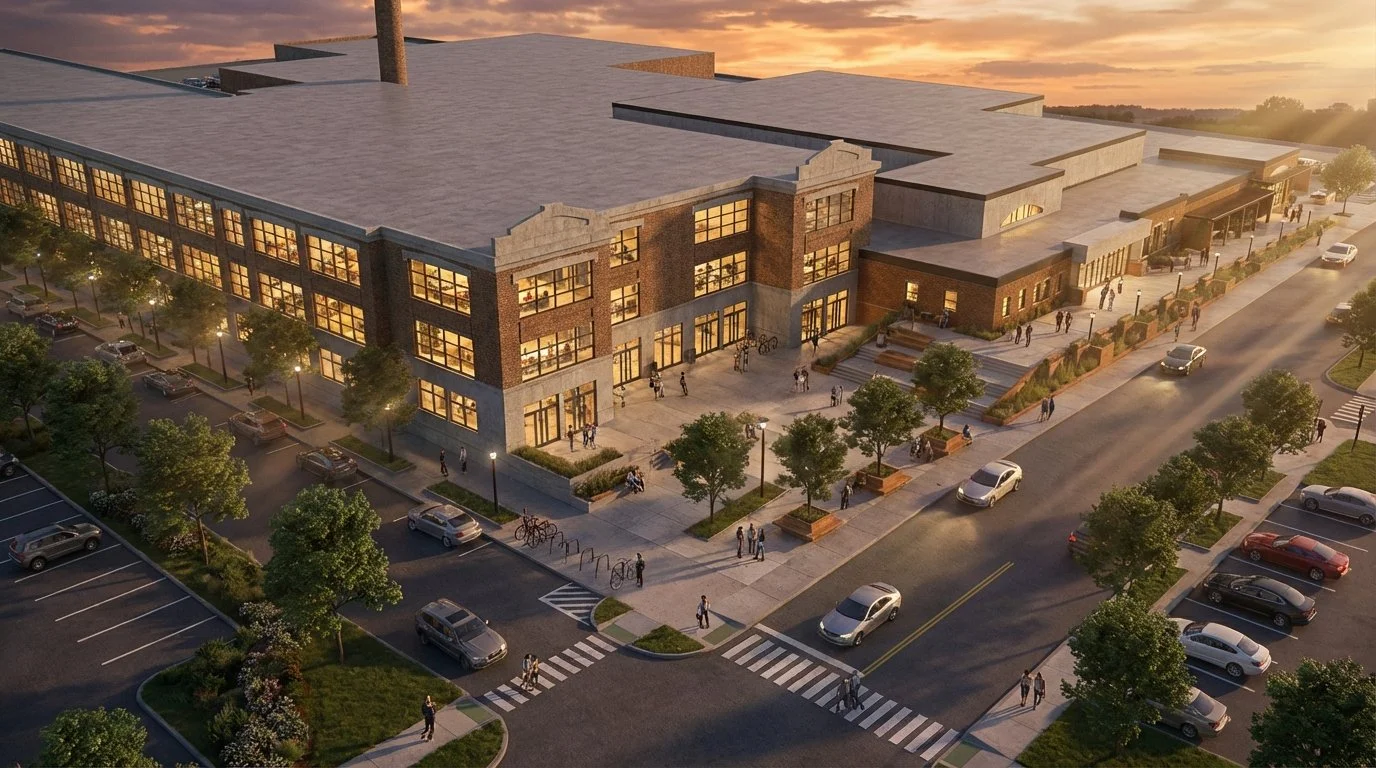
NWI Works Elston Opportunity Hub in Michigan City, Indiana
Across the United States, policymakers, employers, and workforce leaders are confronting the same question: how do we build a workforce system that actually connects people to real careers and helps employers find talent?
Click image to download the report.
A new national report, America’s Talent Strategy: Building The Workforce for The Golden Age, outlines a blueprint for the future of workforce development in the United States. What’s striking is how closely its recommendations align with the model already being implemented through NWI Works and the Opportunity Hub at Elston in Michigan City.
In many ways, the Opportunity Hub is not just a local and regional initiative — it represents exactly the kind of integrated, employer-driven workforce system that national leaders are calling for.
The National Problem: A Fragmented Workforce System
The report highlights a fundamental challenge facing the country: the current workforce system is fragmented, confusing, and disconnected from real employer demand. Programs are scattered across agencies, data systems are siloed, and workers often struggle to find a clear path to high-wage careers.
As a result:
Job seekers must navigate multiple disconnected services.
Employers face overlapping points of contact.
Workforce dollars are spread across programs with limited accountability for outcomes.
The report calls for a fundamental shift toward integrated systems, employer partnerships, and outcomes-based funding.
That shift is exactly what the NWI Works Opportunity Hub model was designed to accomplish.
A Unified “Front Door” to Opportunity
One of the core recommendations of the national strategy is creating workforce systems that are simple, navigable, and integrated across services.
Instead of forcing people to navigate multiple programs, the system should provide:
a clear entry point
coordinated services
guidance to real career pathways
This is precisely the role of the NWI Works Opportunity Hub.
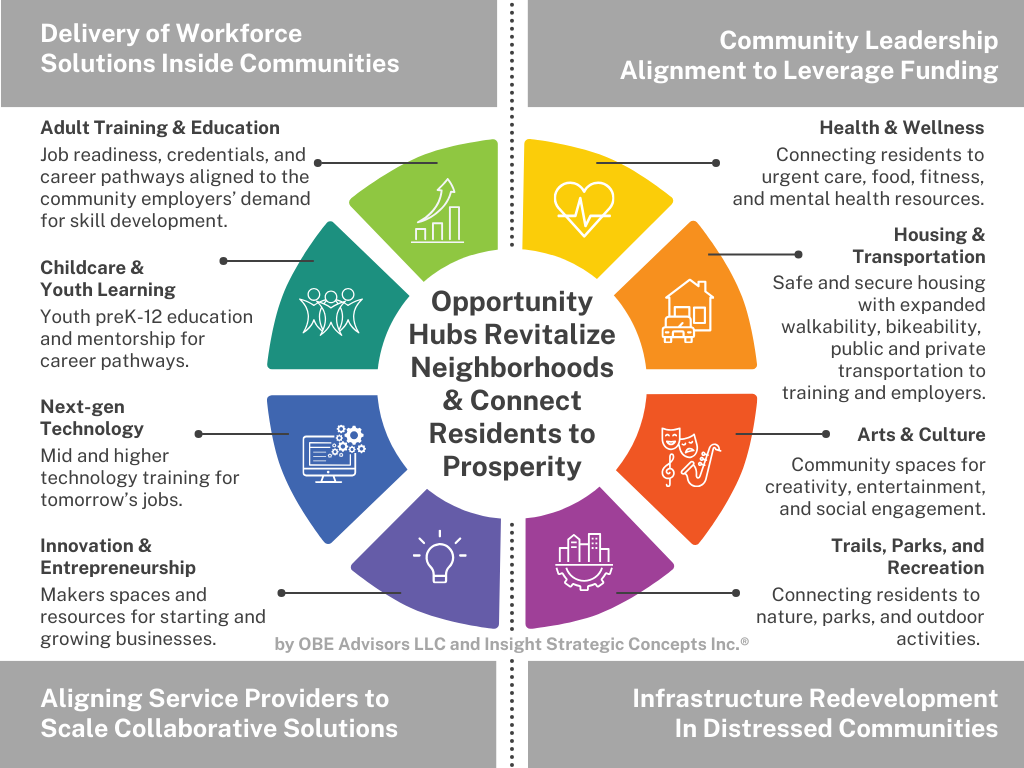
The Elston campus has been designed as a single place where residents can engage, prepare, and connect to opportunity, integrating career coaching, training programs, wraparound supports, and employer connections under one coordinated model.
Through the Hub’s Engage → Prepare → Connect process, residents move from career exploration to skills training and ultimately to job placement and career advancement.
This unified approach removes the “maze” of disconnected services and replaces it with a coordinated pathway to employment and upward mobility.
Employer-Led Workforce Development
Another major theme in the national report is that workforce programs must shift from a “train and pray” model to an employer-driven model.
Training programs should be designed around real job demand, with companies helping define the skills needed and offering direct pathways into employment, while also providing upfront employability skills training to address broader entry-level skills gaps.
The NWI Works Opportunity Hub is built around exactly this principle.
The Hub partners with employers across key regional sectors, including:
advanced manufacturing
healthcare
logistics and transportation
construction and trades
technology
hospitality
Employers help shape training curricula, provide work-based learning opportunities, and participate in hiring pipelines — ensuring that training leads directly to real jobs with real wages.
Apprenticeships and Work-Based Learning
The national strategy also emphasizes expanding Registered Apprenticeships, internships, and other work-based learning pathways as a central component of the future workforce system.
These models shorten the distance between training and employment by allowing participants to:
earn while they learn
gain real-world experience
transition directly into careers
The Opportunity Hub incorporates these same approaches through programs such as:
apprenticeship partnerships with employers
sector-based training cohorts
hands-on technical labs
job placement and career ladder pathways
These programs allow participants to move quickly from learning to earning.
Wraparound Supports That Remove Barriers
A key insight from the national report is that many workers are unable to participate in training or employment because of barriers such as:
childcare
transportation
financial instability
lack of career navigation
Successful workforce systems must provide wraparound supports that enable people to fully participate in training and employment pathways.
The NWI Works Opportunity Hub integrates these services directly into its model by partnering with organizations that provide:
childcare
transportation assistance
healthcare access
financial counseling
youth services and family programming
This integrated ecosystem helps ensure that residents can complete training and sustain employment, not just enroll in programs.
Data, Accountability, and Real Outcomes
Another pillar of the national workforce strategy is data transparency and performance accountability. Programs should be measured by outcomes such as:
job placement
earnings growth
credential attainment
return on investment
The Opportunity Hub model similarly focuses on measurable impact, with goals such as:
serving 5,000–7,500 residents annually
placing 1,000 people into quality jobs
increasing participant household incomes by 20–30%.
By tracking outcomes and aligning programs with real employer demand, the Hub creates a results-driven workforce system.
A National Model Emerging in Northwest Indiana
The Opportunity Hub at Elston represents more than a local and regional redevelopment project. It is a prototype for the next generation of workforce development systems.
It brings together:
workforce training
employer partnerships
entrepreneurship and innovation
health and social services
youth development
community engagement
all within one coordinated ecosystem.
In doing so, it embodies the very principles that national leaders are now calling for: integrated systems, employer-aligned training, work-based learning, and measurable outcomes.
Powered by Strong Community Partnerships
Core partners helping advance this work include:
Center of Workforce Innovations
Goodwill Industries of Michiana
United Way Northwest Indiana
Regional Care Group
CoAction
Food Bank of Northwest Indiana
Together, these organizations strengthen NWI Works’ mission to expand opportunity, increase efficiency, and create sustainable, community‑driven spaces that improve workforce outcomes across the region.
Looking Ahead
America’s workforce system is entering a period of transformation driven by technological change, evolving industries, and the need for stronger talent pipelines.
The national strategy makes it clear that the future belongs to regional, employer-informed, community-based workforce ecosystems.
Northwest Indiana is already building one.
Through the NWI Works Opportunity Hub, Michigan City is positioning itself not only to strengthen its local and regional workforce but also to demonstrate what the future of workforce development can look like across the country.